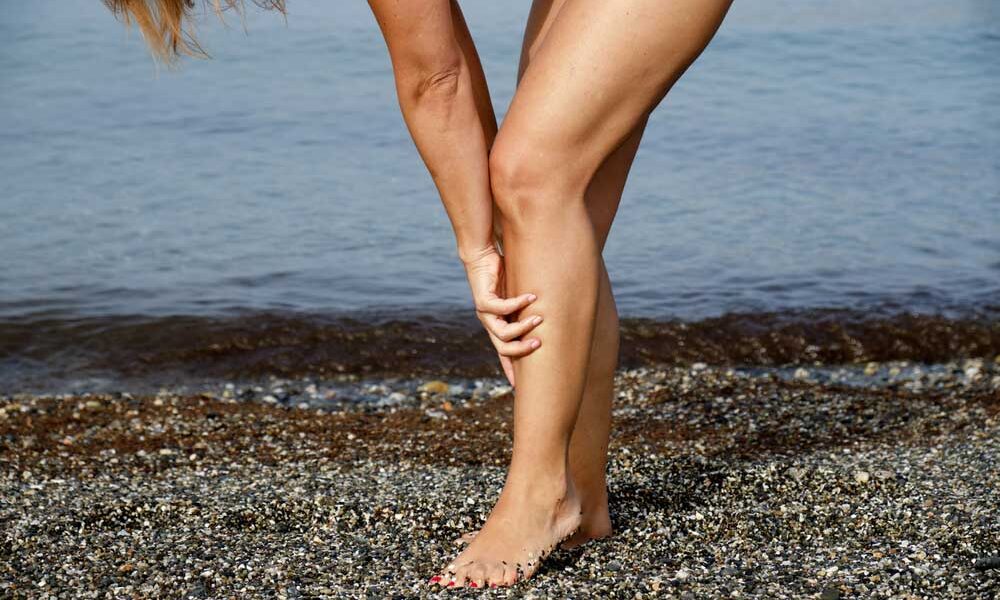
Summer has a way of bringing leg veins to the center of attention. Even if your legs felt fine all winter, the heat of summer can cause them to start aching by mid-afternoon. Your ankles may start to look puffy after a day at the beach, and a long drive to a family reunion can cause your legs to feel heavy and tired.
None of these signs should be considered normal or unchangeable. Often, they are caused by problems in your leg veins that are triggered more by the summer climate. After more than 30 years of treating venous disease on Long Island, Dr. Jerry Ninia has seen how small, consistent changes help patients stay comfortable through the warmest months. Here is what he wants you to know.
How Does Summer Impact Leg Veins?
Your veins are responsible for carrying blood back up your legs toward your heart. They have to work against gravity the entire way. Healthy veins do this efficiently because of one-way valves that keep blood moving in the right direction. They get extra help from your calf muscles, which push the blood upward when they contract.
When it’s hot outside, your veins naturally widen to release heat. When they widen, it’s harder for the valves to do their job, so blood is more likely to pool in your lower legs. Heat also encourages fluid retention, which is why your ankles and feet may swell on a humid day. If you already have weakened valves or varicose veins, summer tends to make the symptoms more noticeable.
Vein Health and Summer Travel
Travel is one of the biggest stressors on your veins, and summer can be full of car rides and airplane flights. Whether you’re driving to the shore or flying across the country, you should be mindful of your leg veins and the strain this can put on them.
Long Car Rides and Vein Health
Your calf muscles squeeze the deep veins in your legs and push blood upward, but only when they are in use. When you sit for hours on a road trip, your calf muscles relax and don’t contract anymore, shutting down this important source of circulation. Blood can start to pool in your lower legs, and pressure starts to build.
Air Travel and Vein Health
Flying includes the same risks as staying still in one position for hours, along with additional exacerbations like cabin pressure and dry, recycled air that can leave you dehydrated. On a flight, people often don’t drink enough water to make up for this because of the limited access to a bathroom and simple distraction. Dehydration means your blood is thicker and circulation is harder. Long flights also carry a higher risk of blood clots because of all of these reasons, so this is worth taking seriously.
How to Protect Your Legs During Travel
On long drives, plan to stop every 60 to 90 minutes to get out and walk for a few minutes. On flights, get up when you can to walk the aisle and do ankle pumps and circles during the times when you are stuck in your seat. Some people choose an aisle seat to make this easier. You can consider wearing compression socks during travel to give your veins extra support and reduce swelling. Sip water often throughout the entire trip, even if it means more bathroom breaks.
Daily Summer Habits That Support Healthy Leg Veins
On days when you aren’t traveling, you have a chance to establish some healthy habits and routines to keep up with your vein health. Try these each day:
Drink Water Before You Feel Thirsty
You don’t have to wait until you’re parched to start drinking water. Fill up an extra-large water bottle at the beginning of the day and commit to drinking some every hour until it’s empty by the end of the day. If you spend time outdoors in the heat, drink even more.
Move in the Morning Before Heat Peaks
Walking, swimming, jogging and cycling all activate the calf muscle and keep blood pumping through your legs. Try doing these activities early in the morning when it’s still cool so you can get the benefits without the heat.
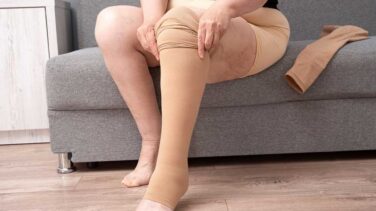
Wear Compression Socks
Graduated compression (tighter at the ankle than at the knee) supports your veins from the ankle up, whether you’re on your feet all day or sitting at your desk. They come in lightweight fabrics that are easier to wear in warm weather. Ask your vein doctor about prescription compression stockings that give you even more support.
Elevate Your Legs for 15-20 Minutes in the Evening
At the end of every day, put your feet up and let the blood and other fluids drain back toward your heart. Just a few minutes per day can make a big difference.
Choose Footwear That Lets Calf Muscles Do Their Job
The best shoes for calf activation are often those that are low-profile, like minimalist or barefoot shoes that require your calves to do most of the work. The heel and toe should be at the same height, with minimal cushioning, allowing for more range of motion. Avoid high heels or rocker bottom shoes that either keep your calf from contracting or do the work for you.
Avoid Long Stretches of Stationary Standing
Standing still is just as detrimental to your vein health as sitting. If your summer plans or work keep you in one spot, shift your weight, invest in a desk treadmill, take breaks and do calf muscle exercises as you stand.
What to Expect at a Vein Evaluation With Dr. Ninia
Another step you can take to address summer varicose veins is to schedule a consultation with a vein doctor. At our practice, you can expect:
Personal Consultations With Dr. Ninia
At the Varicose Vein Center, Dr. Ninia performs every consultation and treatment himself. He is dual board-certified, a Registered Vascular Technologist and a Clinical Associate Professor at Stony Brook University Renaissance School of Medicine. He has spent decades teaching other physicians how to treat venous disease.
What a Diagnostic Ultrasound Can Find
Dr. Ninia performs his own diagnostic ultrasound to see what is happening beneath the surface. This technique can reveal venous reflux (blood pooling backward). This is what causes many of the symptoms you may notice in summer. Once venous reflux is diagnosed, there is a range of different treatments that can be used to address it.
An Honest Assessment of Your Needs
Dr. Ninia will tell you what you need and what you don’t. You may start with conservative measures, like compression socks, and move to minimally invasive methods such as sclerotherapy, laser ablation, VenaSeal, Varithena or ambulatory phlebectomy.
Address Your Vein Problems This Summer With a Consultation in Port Jefferson, NY
Vein problems rarely improve on their own. Left alone, they tend to worsen over time, and what begins as mild aching can develop into more serious complications. The sooner you understand what’s happening in your legs, the more options you have.
If your legs have been bothering you this summer, don’t wait it out. Call the Varicose Vein Center in Port Jefferson Village at 631-474-1414 or request your consultation online. After more than 30 years caring for Long Island patients, Dr. Ninia is ready to help you feel comfortable on your feet again.