Compression stockings are often the first line of defense against bulging veins and aching legs. They are easy to find at the drugstore and simple to put on, and they can be less expensive than other options. But how effective are they, and should you get a prescription for compression stockings? At the Varicose Vein Center in Port Jefferson, NY, Dr. Ninia helps patients every day to find the right solution for their varicose veins to improve their comfort and circulation.
How Compression Stockings Work
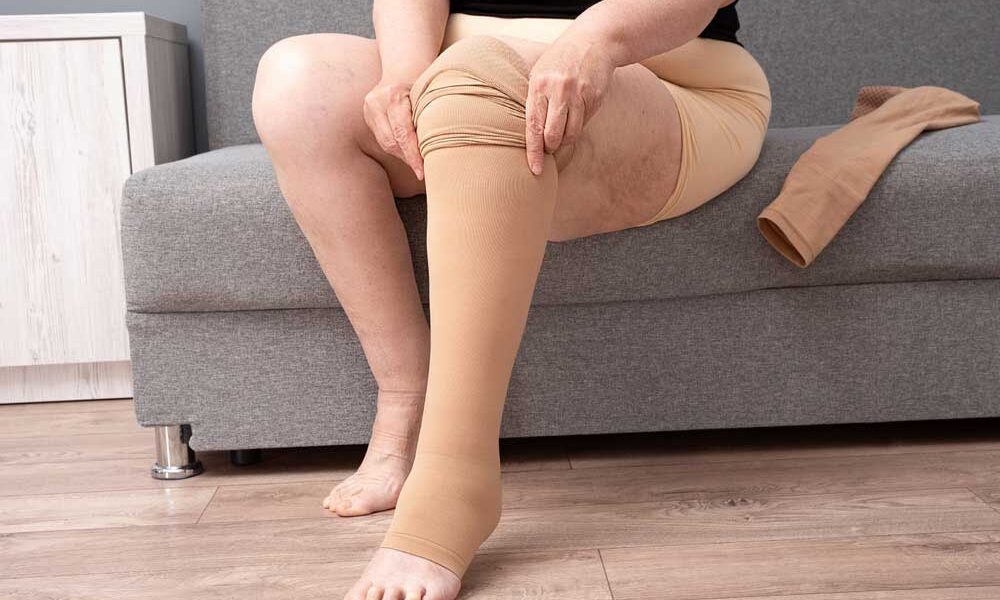
Compression stockings apply pressure to the legs to help blood flow in the right direction. Quality compression stockings are graduated, meaning the pressure is greater near the ankles than it is higher up, helping blood to move even more effectively back toward the heart. Compression stockings are helpful because of how varicose veins form. When the one-way valves that keep blood from pooling in the legs weaken or stop working, blood can no longer effectively move against gravity. Compression stockings help apply this pressure to restore proper blood flow.
Do Compression Stockings Treat the Underlying Problem?
Compression stockings are a good option for reducing achiness, heaviness, swelling and other symptoms that patients with varicose veins experience after a long day on their feet. However, they do not repair the broken valves inside the vein or shrink the visible bulging vessel under the skin. They also need to be worn every day for the benefits to continue.
They are often prescribed in the early stages of varicose veins, but other treatments may eventually be recommended if compression stockings can no longer provide enough relief. Most insurance companies require a trial period with compression stockings for 8-12 weeks before they will approve additional treatments.
When Compression Stockings Make Sense
- For Mild or Early-Stage Veins: If your varicose veins are small and not causing significant discomfort, compression can slow progression and keep symptoms manageable.
- During Pregnancy: Hormonal shifts and increased blood volume put extra pressure on leg veins, and stockings offer an option for managing symptoms until after delivery.
- After Treatment: Compression supports proper healing and improves the final outcome of treatments like sclerotherapy or laser ablation.
- Long Hours on Your Feet: Nurses, teachers, retail workers and anyone who sits or stands for long stretches can use compression to reduce end-of-day swelling and leg fatigue.
- Patients Not Ready for Treatment: Some patients need to manage symptoms conservatively while they prepare for or schedule definitive care.
How to Use Compression Stockings Correctly
Choosing the Right Compression Level
Compression is measured in millimeters of mercury, or mmHg, a standard unit used to measure pressure. Light support is 8 to 15 mmHg and helps with mild cases. Medical-grade compression requires a prescription and starts at 20 to 30 mmHg. Most patients with varicose veins will need prescription-grade stockings, which you can get by scheduling a consultation with Dr. Ninia.
Fitting and Wearing Them Properly
Stockings that are too loose will not be effective, while those that are too tight will inhibit circulation. If you need to measure your legs, be sure to do so in the morning before swelling increases. Put your socks on when you wake up and make sure they are smooth without any wrinkles or bunching.
How Long Should I Wear My Compression Stockings?
The timing will be different for each person, based on their situation and whether they are wearing them after a procedure or as regular maintenance and symptom relief. Most patients wear them during waking hours and take them off at night. Others may need to wear them 24/7 except during bathing for several days before dropping down to daytime wear.
What to Do When Compression Stockings Are Not Enough
If you have tried compression stockings for 8-12 weeks and your symptoms have not improved, it may be time to consider other options. At Varicose Vein Center, your options include:
- VenaSeal™: A medical adhesive is delivered directly into the diseased vein to seal it shut, redirecting blood flow to healthy veins without heat, needles along the vein or compression stockings afterward.
- Endolaser Vein Therapy: A thin laser fiber is inserted into the faulty vein and uses heat energy to close it from the inside, offering a minimally invasive alternative to traditional vein stripping surgery.
- Varithena®: A specially formulated microfoam medication is injected into the diseased vein, causing it to collapse and gradually be absorbed by the body. It is useful for treating veins that are too twisted or curved for laser or adhesive techniques.
- Sclerotherapy: A solution is injected directly into smaller varicose veins and spider veins, irritating the vein walls so they collapse and fade from view over the following weeks.
How the Varicose Vein Center Approaches Conservative Care
Some practices push patients toward treatment regardless of severity. Dr. Ninia takes a different approach. He has more than 34 years of experience and thousands of vein cases behind him, and was already practicing when vein stripping gave way to laser care. He has seen enough cases to know how to pair the right treatments with each patient. He also explains each treatment clearly to his patients so they understand why it is the right call and what to expect from the process.
Scheduling a Diagnostic Ultrasound
Often, the best way to determine what treatment option is best is to schedule a diagnostic ultrasound. These tests are able to detect deeper valve failure and conditions like chronic venous insufficiency that could be contributing to your symptoms. This is often the first step when moving forward with treatment.
Varicose Veins Treatments in Port Jefferson, NY
If varicose veins are affecting your comfort or your daily routine, you have many resources at your disposal to resolve symptoms and the underlying cause. Call the Varicose Vein Center at 631-474-1414 or request a consultation online. Dr. Ninia will give you a straight answer about whether compression is enough, give you a prescription for stockings if needed and walk you through all of your other options.