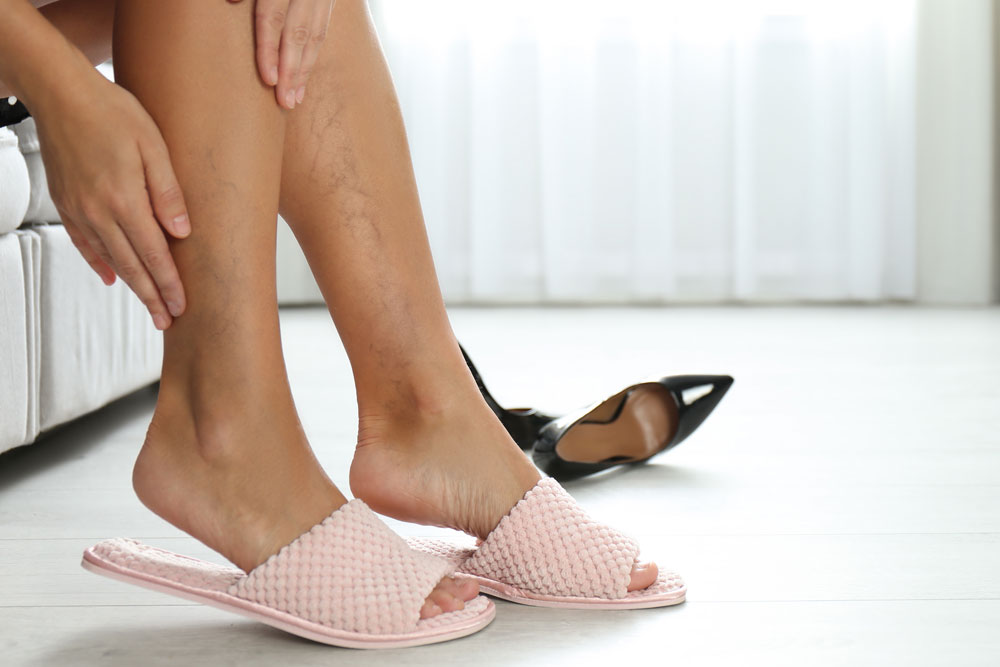
If your legs ache by the end of the day or begin to swell and feel heavy, there is likely more going on than overworked and tired muscles. Chronic venous insufficiency is a common circulation problem, affecting up to 40% of Americans, that tends to worsen when not addressed.
At the Varicose Vein Center, Dr. Jerry G. Ninia believes in treating vein problems as early as possible, using a wide range of minimally invasive treatments to help patients in Long Island manage their discomfort and improve their circulation.
What Is Chronic Venous Insufficiency?
Chronic venous insufficiency (CVI) occurs when the veins in your legs can no longer return blood to your heart efficiently. Healthy leg veins rely on one-way valves that open to let blood upward and close to stop it from moving back down. When these valves weaken, blood pools in your lower legs. This backward flow is called venous reflux, and the pooling raises the pressure inside your veins and causes a variety of symptoms. CVI is progressive, meaning it rarely improves without treatment.
What Are the Symptoms of Chronic Venous Insufficiency?
The symptoms of CVI typically start mild and increase as the condition advances. You might notice:
- Aching, throbbing or tired legs
- Swelling in the lower legs and ankles
- A heavy or full feeling that builds through the day
- Itching, burning or tingling in the skin
- Night cramps or restless legs
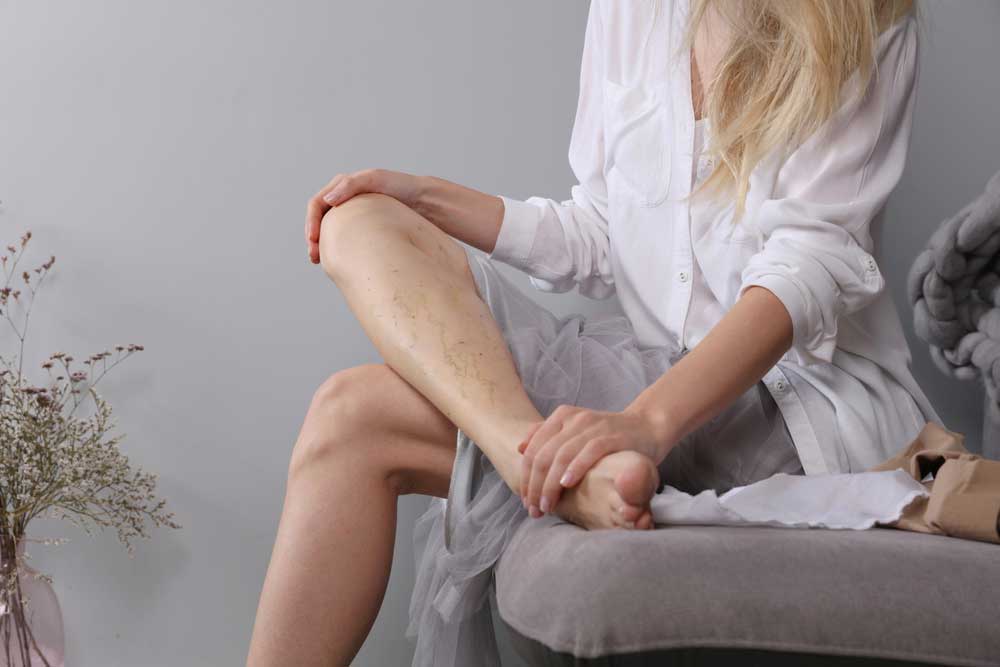
- Visible varicose veins or spider veins
- Skin that looks discolored, darkened or hardened near the ankle
- Dry, flaky or irritated skin that resists moisturizer
When these symptoms are not addressed, they can progress to open sores called venous leg ulcers.
What Causes Chronic Venous Insufficiency?
Valves in the veins weaken for a variety of reasons. One factor is genetics and family history. The tendency for weakened vein valves can be inherited, and if anyone in your immediate family has struggled with chronic venous insufficiency, you may also be more likely to have the condition.
Hormonal changes, like shifting levels in progesterone and estrogen, can relax vein walls and impact valve closure. Additional risk factors include pregnancy, obesity, history of deep vein thrombosis (DVT) and having a job that involves sitting or standing for long periods.
How Does Chronic Venous Insufficiency Progress?
Chronic venous insufficiency moves through stages that build on each other. In the early phase, you may only notice occasional swelling or aching that fades overnight. As pressure in the veins increases, varicose veins can begin to appear, and swelling is harder to resolve.
Eventually, the condition reaches the skin. It can start with brown or reddish discoloration near the ankle, with patches of hardened tissue and skin that feels tight, itchy, dry and shiny. The most advanced stage is a venous leg ulcer, an open wound that struggles to heal because of the ongoing circulation problem beneath it.
How Is Chronic Venous Insufficiency Diagnosed?
A proper diagnosis includes a physical exam, where Dr. Ninia examines your legs for any outward signs of vein problems, and a discussion of symptoms and medical history. The most useful tool is a diagnostic ultrasound. This painless and noninvasive imaging test shows Dr. Ninia how the blood is moving through your veins.
Through this test, he is able to pinpoint which valves are failing and determine whether CVI is present. This information allows him to create a treatment plan to resolve symptoms and improve your circulatory health.
How Is Chronic Venous Insufficiency Treated?
Conservative Management
In many cases, the first step is conservative management of symptoms, both because most insurance companies require it and because it can help to control symptoms and improve blood flow while you wait for additional treatments. Common treatments include prescription-grade compression garments and lifestyle changes such as regular walking and elevating your legs daily.
VenaSeal
VenaSeal closes a diseased vein using a small amount of medical adhesive. Blood naturally reroutes to healthy veins, and most patients notice their symptoms ease quickly. The procedure allows a return to normal activity right away.
Varithena
Varithena is a prescription foam injected into the problem vein, causing it to collapse and close. Because it is used inside the vein, Varithena works well for veins that are twisted or harder to reach.
Laser Vein Ablation
Laser vein ablation uses heat to seal a faulty vein from the inside. Under ultrasound guidance, a laser fiber is guided through the vein to damage it and close it off. This treatment provides lasting relief from the pressure that causes symptoms.
Ambulatory Phlebectomy
Ambulatory phlebectomy removes bulging surface veins through tiny punctures in the skin. Done under local anesthesia with minimal scarring, it relieves pressure right away and pairs well with treatments for deeper veins.
When Should You See a Vein Specialist?
You should schedule an evaluation if your leg symptoms seem consistent or they are interfering with your routine or comfort. The earlier you begin to treat CVI, the easier it will be to manage symptoms and the more you will be able to protect your long-term health. Modern procedures are quick and minimally invasive, without the weeks of recovery and discomfort of vein stripping. You do not need a referral to be seen.
Frequently Asked Questions
What is the difference between chronic venous insufficiency and varicose veins?
Varicose veins are one visible sign of chronic venous insufficiency. CVI is the underlying circulation problem, while varicose veins are the enlarged vessels it can produce. You can have CVI without obvious varicose veins, since much of the damage happens below the surface, and having a varicose vein does not automatically mean you have CVI.
Can chronic venous insufficiency go away on its own?
Damaged vein valves do not repair themselves, so CVI tends to progress without treatment. Lifestyle steps and compression can ease symptoms, but correcting the veins requires a medical procedure.
Is chronic venous insufficiency dangerous?
CVI is rarely life-threatening, but it can seriously affect your comfort and mobility. When left untreated, it may lead to skin damage, chronic swelling or venous leg ulcers that are hard to heal.
Will compression stockings cure venous insufficiency?
Compression stockings support healthy blood flow and help manage symptoms, but do not fix the underlying valve problem. Many patients use them while pursuing a procedure that treats the cause.
Is treatment for chronic venous insufficiency painful?
Modern vein treatments are minimally invasive and performed with local anesthesia. Most patients feel little more than mild pressure during the procedure, depending on the method used, and report only minor soreness after.
How long is recovery after treatment?
With today’s vein treatments, Dr. Ninia can address the problem vein in a short office procedure, and the patient can walk out the same day. There are very few restrictions for activities after the treatment, though it varies from method to method. In most cases, you will need to wear compression stockings for one to two weeks.
Will insurance cover venous insufficiency treatment?
Many insurance plans cover treatment when CVI is causing symptoms, since it is a medical condition rather than a cosmetic one. They may require 6-12 weeks of conservative therapy with medical-grade stockings (20-40 mmHg) with documented compliance and continued symptoms before approving additional treatments.
Book Your Consultation at the Varicose Vein Center
Dr. Ninia is an expert in the field of vein health and has treated patients and educated doctors on best practices internationally for years. He personally performs every step of your care, from the diagnostic ultrasound to the vein treatment. The earlier you understand what is happening in your legs, the sooner you can feel comfortable on your feet again.
You do not have to live with heavy, aching or swollen legs. Contact the Varicose Vein Center in Port Jefferson Village at 631-474-1414 or complete our online form to schedule a vein evaluation.
Give us a call
Monday - Friday
9:00 a.m. - 5:00 p.m.
405 E Main Street
Port Jefferson, NY 11777