At the Varicose Vein Center in Port Jefferson Village, we see patients every week who've been struggling with leg ulcers for months or even years. They've tried countless bandages, creams, and home remedies with no success. What they really need is someone to address the root cause: the venous insufficiency making their wounds incapable of healing on their own.
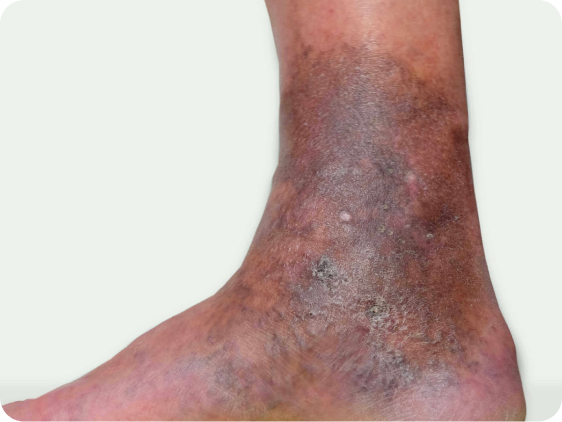
Venous leg ulcers are open wounds that develop when damaged veins in the legs can’t return blood to the heart properly. They’re different from other types of wounds because they’re directly caused by chronic venous insufficiency, the same condition that causes varicose veins.
A typical cut or scrape heals within days or weeks. With a venous ulcer, the wound persists because there is an underlying circulation problem that prevents the body’s natural healing process from working effectively. It may heal slowly, or it may not heal at all without medical intervention.
What Are the Symptoms of Leg Ulcers?
The signs and symptoms of a venous ulcer may start well before the wound appears. You might notice:
An open sore that won’t heal after 2-4 weeks (usually located above the ankle)
Skin discoloration around the wound (brown, purple, or red patches)
Pain, itching, and swelling in the affected leg
Hardened skin around the ulcer
Foul-smelling discharge produced by the sore
Heavy, tired, or aching legs (especially after standing)
Visible varicose veins or spider veins near the wound
Skin that looks shiny, tight, or stretched thin
Leg cramping (particularly at night)
What Causes Leg Ulcers?
Your veins contain one-way valves that control blood pressure and the direction of blood flow through the vessels. For a variety of reasons, these valves can weaken or fail, and instead of oxygen-poor blood flowing from your extremities back to your heart, it accumulates in your legs and increases pressure in your veins. This is called venous reflux.
As the problem continues, it can lead to tissue damage and eventually an ulcer. Think of it like a traffic jam in your veins — when blood can’t move forward efficiently, pressure builds up and eventually something has to give.
Various factors can trigger or worsen venous insufficiency:
Previous deep vein thrombosis (DVT) or blood clots
Varicose veins left untreated for years
Prolonged standing or sitting in your job
Obesity, which increases pressure on leg veins
Pregnancy, especially multiple pregnancies
Previous leg injuries or surgeries
Family history of vein problems
Natural aging of vein valves
How Are Leg Ulcers Treated?
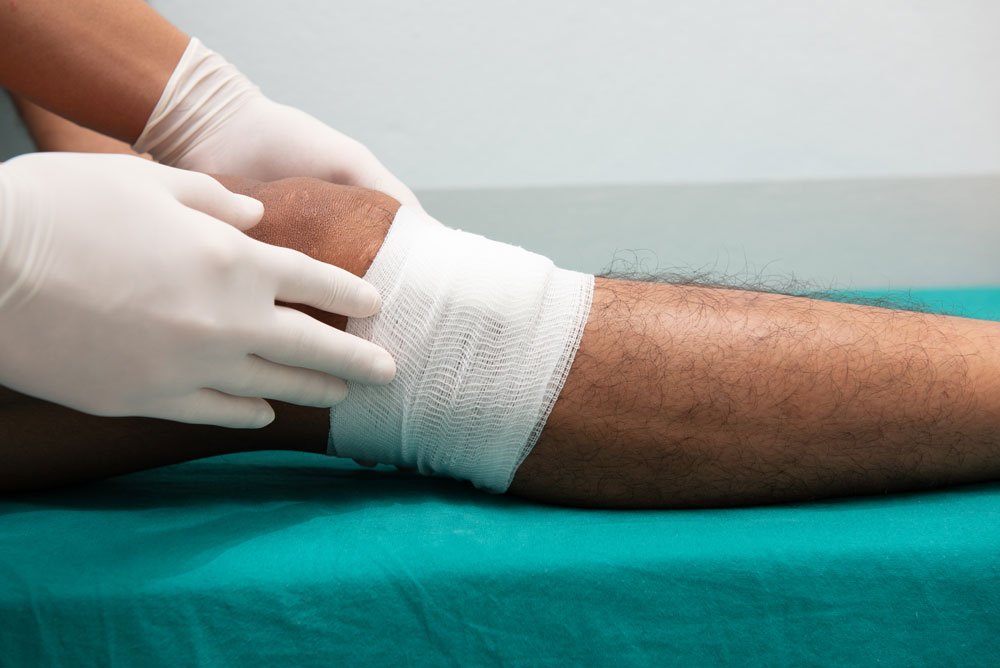
At the Varicose Vein Center, we take a comprehensive approach to leg ulcers that addresses both the wound and its root cause.
Your treatment starts with a consultation. During this appointment, Dr. Ninia conducts a medical history review and physical examination. He also uses diagnostic ultrasound to identify exactly which veins are problematic and why. This information shapes your personalized treatment plan.
Treating the Underlying Venous Disease
Once your ulcer has improved or healed, we move to the crucial next step: correcting the venous condition that caused the problem in the first place. Without this step, ulcers often recur within months. We offer multiple advanced options to address venous insufficiency:
VenaSeal™
Varicose veins don’t just change how your legs look. In many cases, they leave you with daily aching, burning, fatigue and heaviness that’s hard to ignore. At the Varicose Vein Center in…
Varithena is a specialized microfoam that takes the proven concept of sclerotherapy and makes it effective for veins that liquid solutions can't adequately address. The procedure treats both your visible veins and…
Whether they’re visible on the surface or causing discomfort below it, these veins often point to deeper circulation problems. Left untreated, they can worsen over time and impact both your confidence and…
Bulging varicose veins can affect your appearance, confidence, comfort, and quality of life. These veins won't get better on their own, but the thought of traditional vein stripping surgery — and its…
Visible veins on your legs only tell part of the story of your vascular health. What you can see on the surface often points to deeper problems that have been developing for…
In 30 years of practice, Dr. Ninia has performed thousands of sclerotherapy procedures. That's thousands of patients who came in feeling self-conscious about their veins and left with the confidence to show…
Many people on Long Island suffer from the existence of varicose veins. These twisted, bulging veins may make you feel self-conscious about how your legs look, and you may find yourself changing…
Book Your Consultation at the Varicose Vein Center
Don’t wait for your ulcer to become infected or worsen. The sooner we address the root cause, the faster you can get back to living without the daily worry that comes with a chronic wound.
Contact our Long Island vein clinic today to schedule your vein health evaluation.